How Custom Clothing Production Works From Sample to Bulk Order
For fashion startups, private label brands, streetwear labels, and bulk buyers, understanding how custom clothing is made can make the sourcing process much smoother.
The custom clothing production process includes more than cutting and sewing. It starts with requirement review, fabric and trim sourcing, pattern making, sample development, sample approval, bulk production, quality control, packing, and shipping.
This guide explains how custom clothing production usually works from first sample to bulk order, and what buyers should prepare at each stage.
For fashion startups, private label brands, streetwear labels, and bulk buyers, understanding how custom clothing is made can make the sourcing process much smoother.
The custom clothing production process includes more than cutting and sewing. It starts with requirement review, fabric and trim sourcing, pattern making, sample development, sample approval, bulk production, quality control, packing, and shipping.
This guide explains how custom clothing production usually works from first sample to bulk order, and what buyers should prepare at each stage.
Why the Custom Clothing Production Process Matters
Most production problems begin before bulk sewing starts. Unclear design files, unconfirmed fabrics, missing artwork, late label decisions, or size breakdown changes can all cause delays and extra cost.
For buyers, understanding the process helps you know what to prepare, when to approve details, and which changes may affect MOQ, lead time, and final quality.
Before bulk production begins, key details should be confirmed:
- Approved sample
- Final fabric and color
- Size chart
- Artwork placement
- Trims and labels
- Packaging method
- Quantity by size and color
- Shipping method
Once fabric is cut or bulk sewing begins, major changes should be avoided because they may affect material usage, cost, delivery time, and product consistency.

Step 1: Requirement Review
The first step is reviewing the buyer’s requirements. This helps the manufacturer understand the product, estimate cost, and decide whether the project is ready for sampling.
Buyers may provide:
- Tech packs
- Reference photos
- Sketches
- Size charts
- Fabric ideas
- Logo or artwork files
- Print or embroidery placement
- Label and packaging requirements
- Estimated quantity
- Delivery country
- Target timeline
If the buyer has a complete tech pack, the factory can review measurements, construction details, fabric specifications, trims, labels, and size grading.
If the buyer only has reference photos or early ideas, the factory can help organize the information into a workable sample plan. Clear notes about fit, fabric feel, colors, and logo placement are very helpful.
Step 2: Fabric and Trim Sourcing
After requirements are reviewed, the factory checks fabric and trim options. This step affects sample quality, MOQ, cost, and lead time.
For faster development, buyers can use available fabrics and standard trims. This is often suitable for T-shirts, hoodies, sweatshirts, pants, and simple streetwear styles.
If the project requires custom-dyed fabric, special rib, unique zippers, custom buttons, or exclusive accessories, MOQ and lead time may increase.
Fabric review may include:
- Fabric composition
- GSM or weight
- Hand feel
- Stretch
- Color
- Shrinkage
- Printing or embroidery compatibility
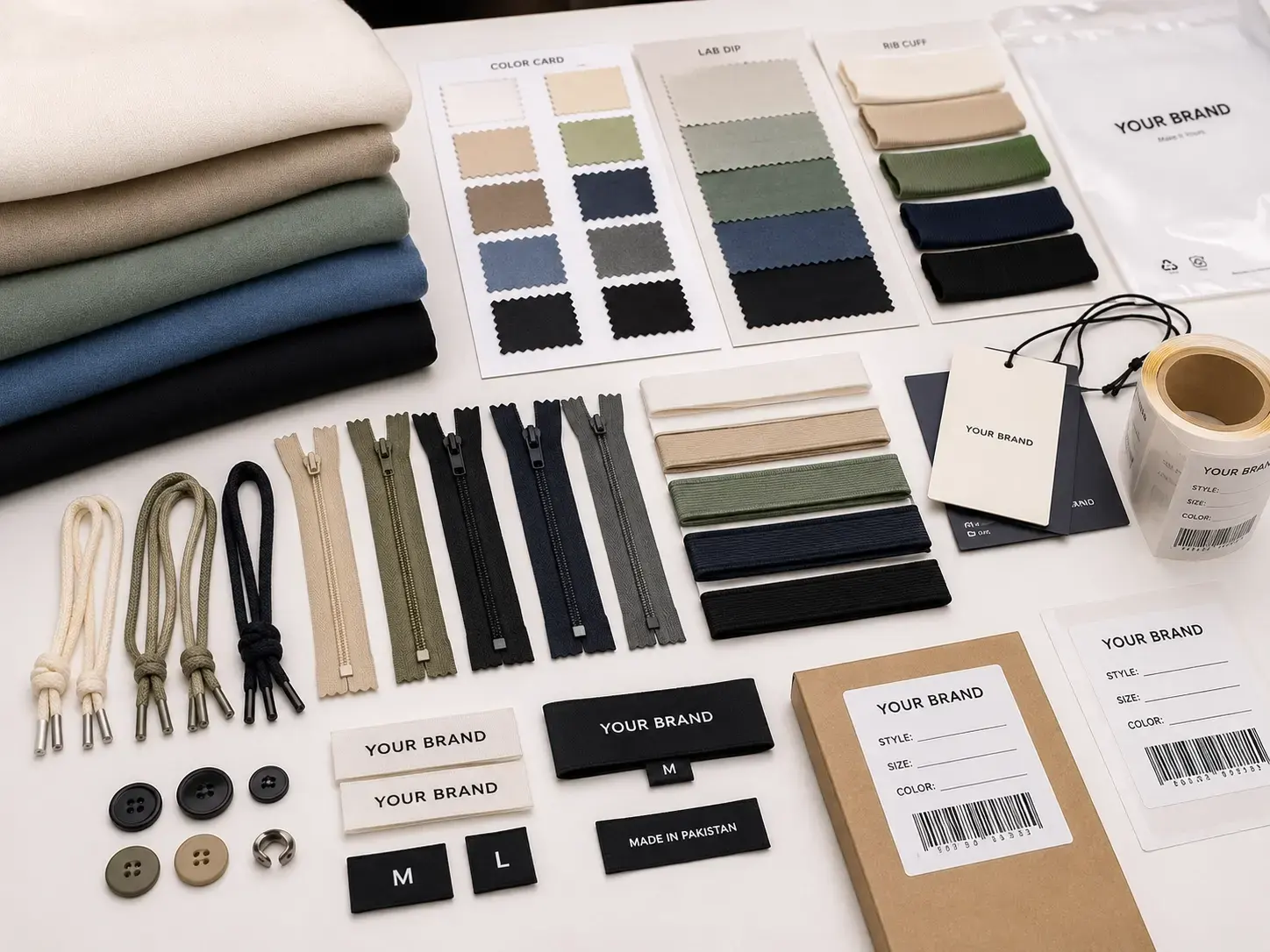
Trim sourcing may include rib cuffs, drawstrings, zippers, buttons, elastic bands, woven labels, neck labels, hang tags, barcode stickers, poly bags, and carton labels.
For color-sensitive projects, buyers may need to approve fabric swatches or lab dips before bulk production.
Step 3: Pattern Making and Sample Development
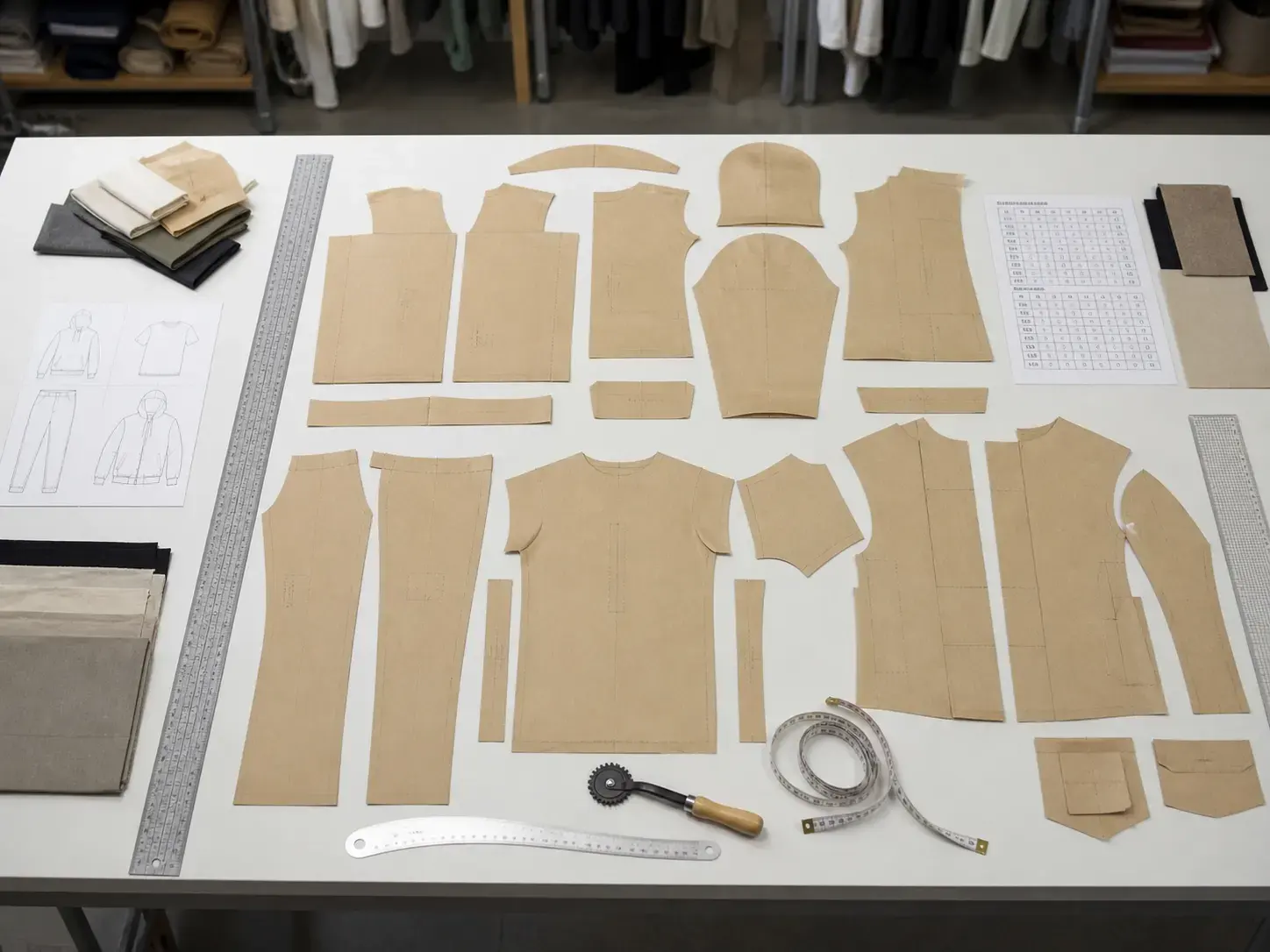
Pattern making turns a design into garment pieces that can be cut and sewn. It is especially important for custom fit, oversized silhouettes, streetwear shapes, fitted activewear, pants, jackets, and cut-and-sew products.
A pattern controls the garment’s shape, length, shoulder width, sleeve shape, waist, hips, neckline, pocket placement, and overall proportion.
After the pattern is prepared, the factory makes the first sample. The sample helps buyers check:
- Fit and measurements
- Fabric hand feel
- Stitching method
- Print or embroidery placement
- Label position
- Trim quality
- Overall construction
For simple styles, the first sample may be close to final. For more complex garments, one or two rounds of revisions may be needed.
Step 4: Sample Review and Approval
Sample approval is one of the most important steps in the custom clothing production process. The approved sample becomes the reference standard for bulk production.
Buyers should review:
- Overall fit and silhouette
- Garment measurements
- Fabric quality and thickness
- Color accuracy
- Stitching quality
- Print size and placement
- Embroidery quality
- Label and tag placement
- Hardware and trim quality
- Washing result if needed
- Packaging sample if included
Feedback should be specific. Instead of saying “the fit is not good,” it is better to say “increase chest width by 2 cm” or “shorten sleeve length by 1.5 cm.”
Before bulk production, buyers should confirm the final sample, size chart, fabric, color, artwork, print or embroidery method, labels, packaging, quantity, price, and lead time.
Step 5: Bulk Production
Bulk production begins after sample approval and final order confirmation.
Pre-production Preparation
Before cutting starts, the factory prepares the production sheet, approved sample, bulk fabric, trims, labels, artwork files, size breakdown, and packing instructions.
For some projects, a pre-production sample or size set sample may be used to confirm final details before full production.
Bulk Cutting
Fabric is laid out and cut according to the approved pattern and size ratio. Cutting accuracy is important because mistakes at this stage can affect the whole order.
Sewing
Cut pieces are sewn into garments. Sewing steps depend on product type. A T-shirt is usually simpler, while hoodies, jackets, pants, tracksuits, and cut-and-sew streetwear may require more operations.
Printing and Embroidery
Printing and embroidery are arranged based on artwork placement and production method. Some decoration work is done on panels before sewing, while other methods can be applied to finished garments.
Common options include screen printing, DTF printing, DTG printing, sublimation, puff print, and embroidery.
Finishing
Finishing may include thread trimming, ironing or steaming, washing if required, label attachment, hang tag application, folding, and final presentation.
Step 6: Quality Control, Packing, and Shipping
Quality control should happen during production and before packing. The goal is to make sure the bulk order follows the approved sample and final production requirements.
Common QC checks include:
- Fabric defects and color consistency
- Measurement tolerance
- Stitching quality
- Print or embroidery position
- Print color and durability
- Label and hang tag accuracy
- Size ratio and quantity
- Loose threads, stains, or visible defects
- Packing method and carton information
For larger orders, inline inspection during sewing can help find issues earlier. Final inspection checks finished garments against the approved sample, size chart, artwork file, and packing instructions.
After QC, garments are folded and packed. Packaging may include individual poly bags, size stickers, barcode labels, hang tags, branded packaging, carton labels, and packing lists.
Shipping depends on order volume, destination country, budget, and urgency. Samples are usually shipped by express. Small urgent bulk orders may use air freight. Larger orders often use sea freight to reduce cost.
Common Production Risks to Avoid
Many production delays can be avoided if key details are confirmed before bulk production starts.
Common risks include:
- Incomplete tech packs
- Unclear reference photos
- Missing artwork files
- Fabric shortages
- Unapproved fabric colors
- Late sample feedback
- Multiple sample revisions
- Late label or packaging confirmation
- Design changes after sample approval
- Incorrect size breakdown
- Unclear shipping instructions
Changing design details after sample approval is especially risky. Once bulk materials are prepared or fabric has been cut, changes may increase cost, extend lead time, or create quality inconsistencies.
A final production checklist can help reduce these risks.
How MX Clothing Can Help
MX Clothing helps fashion startups, private label brands, streetwear labels, and bulk buyers manage custom clothing production from sample development to bulk delivery.
For buyers with tech packs, MX Clothing can review garment specifications, fabric requirements, measurements, artwork placement, trims, labels, packaging, and quantity details before sampling.
For buyers with only reference photos or early ideas, the team can help organize the information into a practical production plan.
Production support can include:
- Fabric and trim sourcing
- Pattern making
- Sample development
- Sample revision
- Print and embroidery testing
- Private label customization
- Pre-production preparation
- Bulk cutting and sewing
- Finishing and quality control
- Packing and shipping coordination
To start a production review, buyers can send reference photos or tech packs, estimated quantity, fabric preferences, size range, artwork files, label requirements, packaging needs, delivery country, and target timeline.
Final Thoughts
The custom clothing production process is a step-by-step system that connects design review, fabric sourcing, pattern making, sample approval, bulk production, quality control, packing, and shipping.
For buyers, the most important rule is to confirm details before production moves forward. The approved sample, final fabric, size chart, artwork, trims, labels, packaging, quantity breakdown, and shipping method should all be clear before bulk cutting begins.
A smooth production order starts with clear information and timely approval. When buyers and manufacturers work from the same confirmed details, it is easier to reduce delays, control quality, and deliver garments that match the approved sample.
FAQ
What information do I need before starting custom clothing production?
You should prepare tech packs or reference photos, fabric ideas, size requirements, artwork files, label details, packaging needs, estimated quantity, delivery country, and target timeline.
Do I need a tech pack for custom clothing production?
A tech pack is helpful, especially for fully custom garments. If you do not have one, reference photos, sketches, size notes, fabric ideas, and clear artwork files can help start sample development.
What is the difference between sample approval and bulk production?
Sample approval confirms the final garment standard. Bulk production starts after the sample, fabric, artwork, labels, packaging, quantity, and timeline are approved.
How long does custom clothing production take?
Timeline depends on product complexity, fabric availability, sample revisions, order quantity, printing, embroidery, packaging, and shipping method. Simple samples may take around 1–3 weeks, while bulk production usually takes several weeks after approval.
What causes delays in custom clothing production?
Common delays include unclear requirements, missing artwork, fabric shortages, unapproved colors, late sample feedback, label delays, design changes after approval, incorrect size breakdown, and unclear shipping instructions.
READ NEXT
Related Articles


POPULAR PRODUCTS
Hot Selling Products