Custom Anime T-Shirts: Fabric, Printing and Sampling Guide for Brands
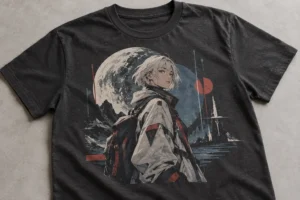
Anime-inspired apparel needs more than an eye-catching graphic. For clothing brands, the finished T-shirt must bring together the right fabric, a consistent fit, clear artwork, and a print finish that matches the collection.
A design that looks convincing on a screen may feel different when printed on fabric. Garment color, artwork dimensions, print placement, and production methods all need to be reviewed before bulk manufacturing.
This guide explains how to prepare custom anime T-shirts for sampling and production, from choosing a base fabric to sending a useful brief to your manufacturer.
1. Define the Product Before Choosing the Printing Method
Start by deciding what your customers should receive.
Are you developing an oversized streetwear tee, a lightweight event shirt, or a regular-fit graphic T-shirt for everyday wear? Each direction creates different requirements for fabric, measurements, and artwork placement.
Prepare a short product brief covering:
- Target customer and intended use.
- Regular, relaxed, oversized, or cropped fit.
- Garment colors and estimated quantities.
- Front, back, and sleeve artwork.
- Labels, packaging, and desired delivery date.
Use original artwork or designs you have permission to reproduce. Tell your manufacturer about any artwork restrictions or approval requirements before sampling.
2. Choose Fabric by Feel, Structure and Print Compatibility
Fabric selection should support the product you want to sell.
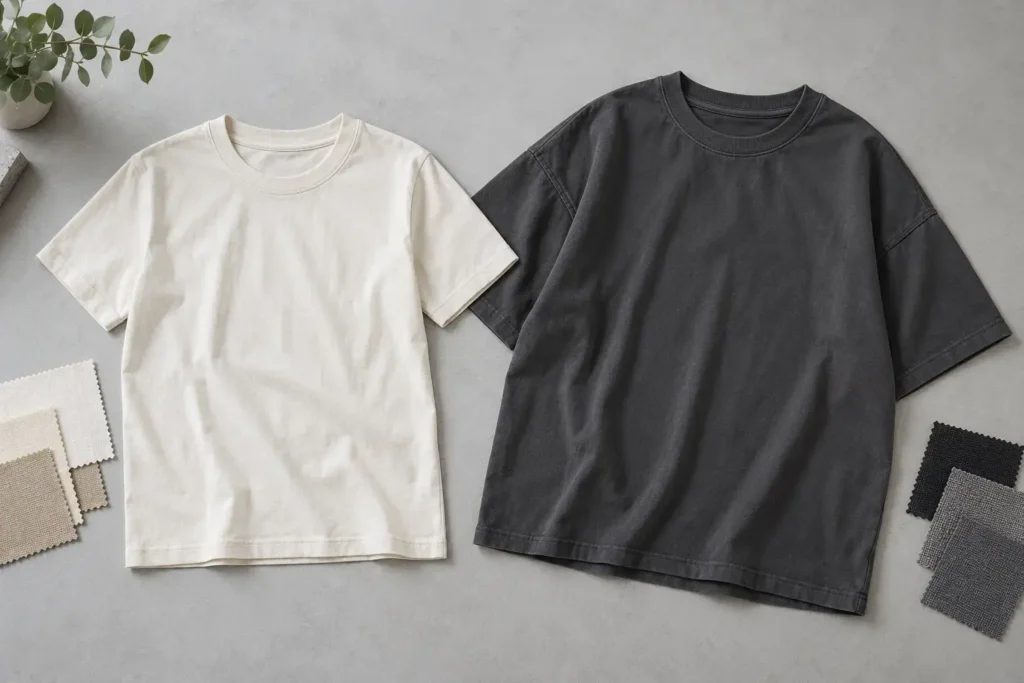
For a cotton-based graphic tee, compare actual swatches for softness, surface texture, stretch, and structure. If you are considering a blend, confirm its exact composition rather than relying on descriptions such as “premium cotton.”
GSM describes fabric weight per square meter. It does not establish quality on its own. Two fabrics with the same GSM can differ in yarn, construction, finishing, and feel.
| Product direction | What to review |
|---|---|
| Everyday graphic T-shirts | Comfort, opacity, surface texture, and care requirements |
| Oversized streetwear tees | Structure, drape, neckline, and sleeve shape |
| Lightweight event merchandise | Fabric weight, print requirements, and total project budget |
| Performance-inspired designs | Composition, intended use, and printing compatibility |
Ask for a fabric recommendation based on your reference garment and artwork. Approve the chosen material before confirming bulk production.
3. Develop the Fit with Measurements
“Oversized” is not a complete size specification.
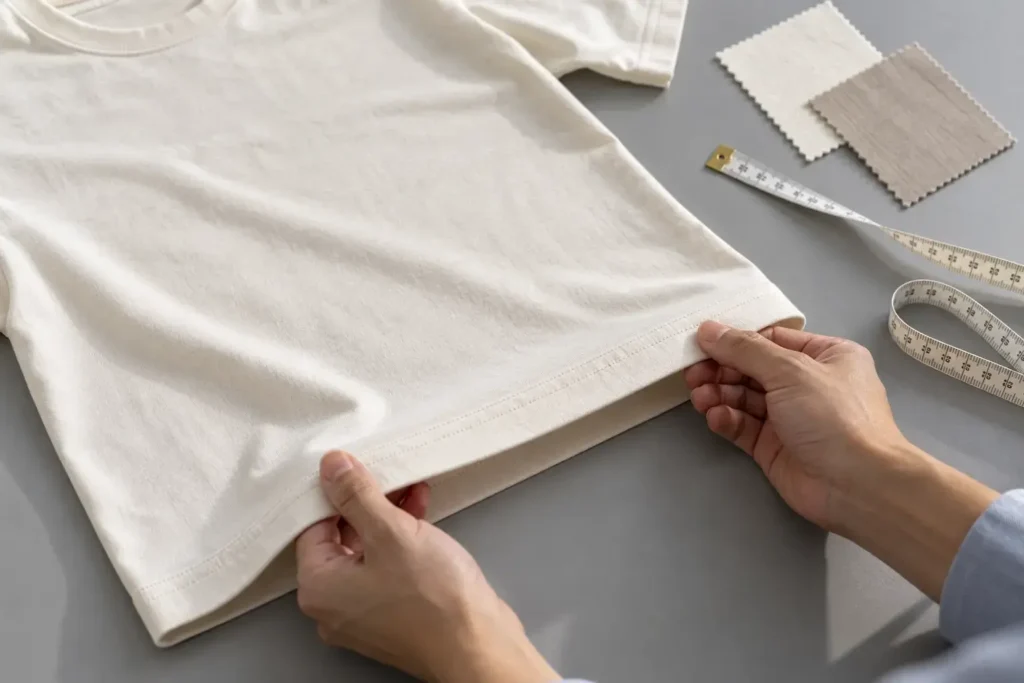
Two oversized T-shirts can have very different body lengths, shoulder widths, sleeve openings, and necklines. Provide a measurement chart or a physical reference sample whenever possible.
Key measurements include:
- Chest width.
- Body length.
- Shoulder width.
- Sleeve length and opening.
- Neck opening and rib width.
For large graphics, also review how the print should appear across the size range. Confirm whether all sizes will use one artwork size or require different print dimensions.
You can explore our custom oversized T-shirt options when preparing your fit brief.
4. Match the Print Process to the Actual Design
Select the printing method after reviewing the artwork, fabric, garment color, and order quantity.
| Method to discuss | What to confirm during sampling |
|---|---|
| Screen printing | Color separations, setup requirements, detail reproduction, and print feel |
| Direct-to-garment printing | Fabric compatibility, pretreatment, color appearance, and wash performance |
| Direct-to-film transfers | Transfer dimensions, surface feel, application quality, and wash performance |
| Sublimation | Fabric suitability, base color, and whether the design requires printed panels |
Do not choose a method from the digital mockup alone. Request a sample using the intended production fabric and inspect the result in person.
Conventional dye sublimation is associated with polyester substrates. Specialized treatments and systems can change the available options, so confirm the actual process rather than assuming every fabric is suitable.
MX Clothing coordinates printing and embroidery through specialist production partners. The suitable process and project requirements are confirmed during development.
5. Prepare Artwork and Placement Instructions
Send production artwork alongside a garment mockup.
Your manufacturer needs to understand both the graphic itself and where it belongs on the garment. A screenshot alone may leave important details unclear.
Include:
- The original editable file when available.
- Print width and height in centimeters.
- Placement measurements from agreed garment reference points.
- Color references and background requirements.
- Separate files for front, back, and sleeve designs.
- Instructions for any intentional distressed effects.
Ask the manufacturer to confirm file suitability before sampling. Do not assume that increasing an image’s resolution will restore missing detail.

6. Use Sampling to Resolve Decisions
The sample should help you approve the complete garment, not just the artwork.
Check the fabric, measurements, neckline, seams, print placement, labels, and overall appearance. Review the garment after washing according to the proposed care instructions, and document any changes you need.
For MX Clothing projects, sample development usually takes around 15 working days after project requirements and materials are confirmed, depending on fabric availability, garment complexity, techniques, and project requirements. Timing is confirmed for each project.
Keep sample feedback in one clear revision list. Once approved, retain the agreed sample and specifications as references for bulk production.
7. Confirm MOQ, Production Timing and Packaging
MX Clothing’s standard MOQ is 100 pieces per style per color, with mixed sizes allowed.
Before ordering, confirm the size breakdown, artwork variations, labels, packaging, inspection requirements, and shipping arrangements. Ask whether any material or process creates additional minimum requirements.
Bulk production usually takes 25–35 days after sample approval and order confirmation, with final timing confirmed for each project. Production time and shipping time should be discussed separately.
Avoid promising a launch date until the complete schedule has been reviewed.
8. What to Send for an Accurate Quote
A useful RFQ allows the manufacturer to assess the garment without repeatedly asking for missing details.
Send your design or tech pack, preferred fabric, fit reference, garment colors, size range, quantity per color, artwork dimensions, branding requirements, and delivery destination.
If some specifications are undecided, explain the result you want and your budget priorities. Ask for a recommended option instead of choosing every technical detail yourself.
Explore our custom T-shirt manufacturing capabilities or review our anime T-shirt manufacturer comparison for additional supplier-selection context.
Final Thoughts
Successful custom anime T-shirts begin with a clear product brief. Fabric, fit, artwork, and printing should be developed together so the approved sample reflects the product your customers will receive.
Start with a manageable collection, resolve important decisions during sampling, and confirm specifications before bulk production. This gives both your brand and your manufacturer a clearer reference throughout the project.
Ready to develop your custom anime T-shirts? Contact MX Clothing with your artwork, estimated quantities, and product requirements to discuss sampling and production.
FAQs
1. What is the MOQ for custom anime T-shirts at MX Clothing?
The standard MOQ is 100 pieces per style per color, with mixed sizes allowed. Confirm any material-specific or process-specific requirements before ordering.
2. How long does sample development take?
Sample development usually takes around 20 days, depending on fabric availability, garment complexity, techniques, and project requirements. Timing is confirmed for each project.
3. Which printing method should I choose?
The suitable method depends on your artwork, fabric, garment color, quantity, and preferred finish. Confirm the process through a sample before approving bulk production.
4. Can I customize the fit and labels?
Custom fit measurements, labels, and packaging can be discussed during development. Include these requirements in your brief so their feasibility, cost, and timing can be reviewed.
5. What should I send to request a quote?
Send your artwork or tech pack, fabric preferences, fit reference, garment colors, size range, quantity per color, branding requirements, and delivery destination.
6. How long does bulk production take?
Bulk production usually takes 25–35 days after sample approval and order confirmation. Final timing is confirmed for each project, and shipping time is discussed separately.
READ NEXT
Related Articles
POPULAR PRODUCTS
Hot Selling Products