Custom T-shirt Manufacturer: Fabric, Printing, MOQ Guide
T-shirts are one of the most common first products for fashion startups, private label brands, online stores, streetwear labels, and bulk buyers. They are easy to customize, suitable for many markets, and flexible for printing, embroidery, labels, and packaging.
Working with the right custom T-shirt manufacturer helps you turn ideas into production-ready garments. Before requesting a quote, buyers should understand fabric options, GSM, fit, printing methods, MOQ, sample cost, and bulk production lead time.
This guide explains the key points to prepare before starting a custom T-shirt project.
Why Custom T-shirts Are Popular for Apparel Brands
Custom T-shirts are often easier to develop than jackets, pants, or complex cut-and-sew garments. For new brands, they are a practical product to test design direction, fabric quality, graphics, fit, and customer response.
They are suitable for:
- Streetwear brands
- Private label basics
- Online clothing stores
- Event merchandise
- Uniforms and promotional apparel
- Sportswear and activewear lines
A T-shirt may look simple, but details such as fabric weight, neckline, shoulder shape, sleeve length, print placement, and label finishing all affect the final product quality.
Fabric Options for Custom T-shirts
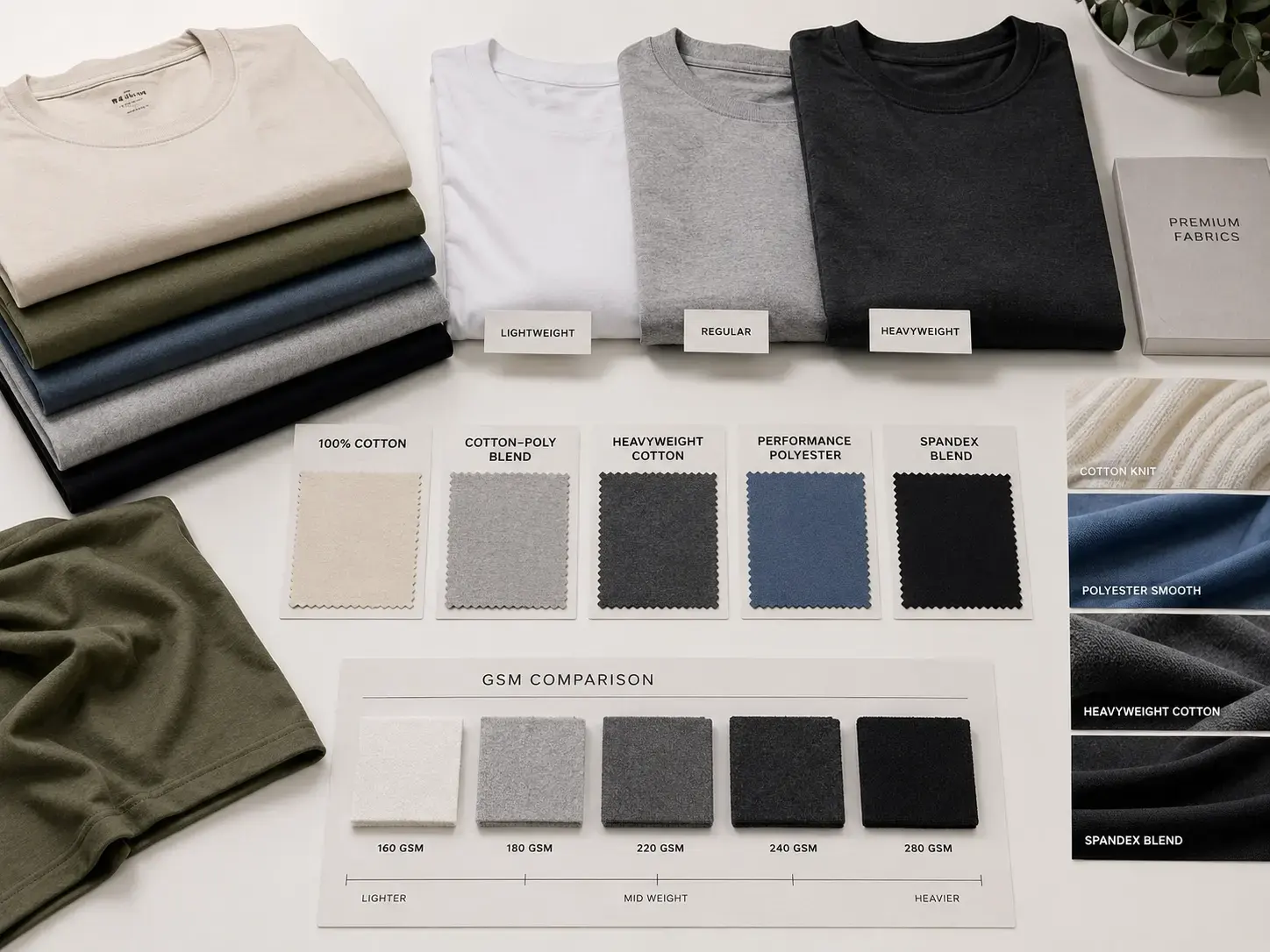
Fabric affects comfort, cost, fit, shrinkage, and printing results. Choosing the right fabric is one of the first decisions in custom T-shirt manufacturing.
Cotton is soft, breathable, and widely used for everyday T-shirts. It works well for basic collections, lifestyle brands, and many printing methods.
Cotton-polyester blends can improve durability, shape retention, and wrinkle resistance. They are often used for casualwear, uniforms, and promotional T-shirts.
Heavyweight cotton is popular for streetwear and premium T-shirts. It gives the garment more structure and works well with oversized, boxy, and dropped-shoulder fits.
Performance polyester is common for sports T-shirts, training tops, and teamwear. It is suitable for moisture-wicking fabrics and sublimation printing.
Spandex blends add stretch and recovery, making them useful for fitted T-shirts, activewear, and gym styles.
GSM means grams per square meter. Common reference ranges include:
- 140–180 GSM: lightweight T-shirts
- 180–220 GSM: regular casual T-shirts
- 220–300 GSM: heavyweight or streetwear T-shirts
Higher GSM does not always mean better quality. The right choice depends on your brand positioning, target price, climate, and fit.
Fit, Sizing, and Construction Details
Fit is a key part of a custom T-shirt project. The same fabric can look very different depending on the pattern.
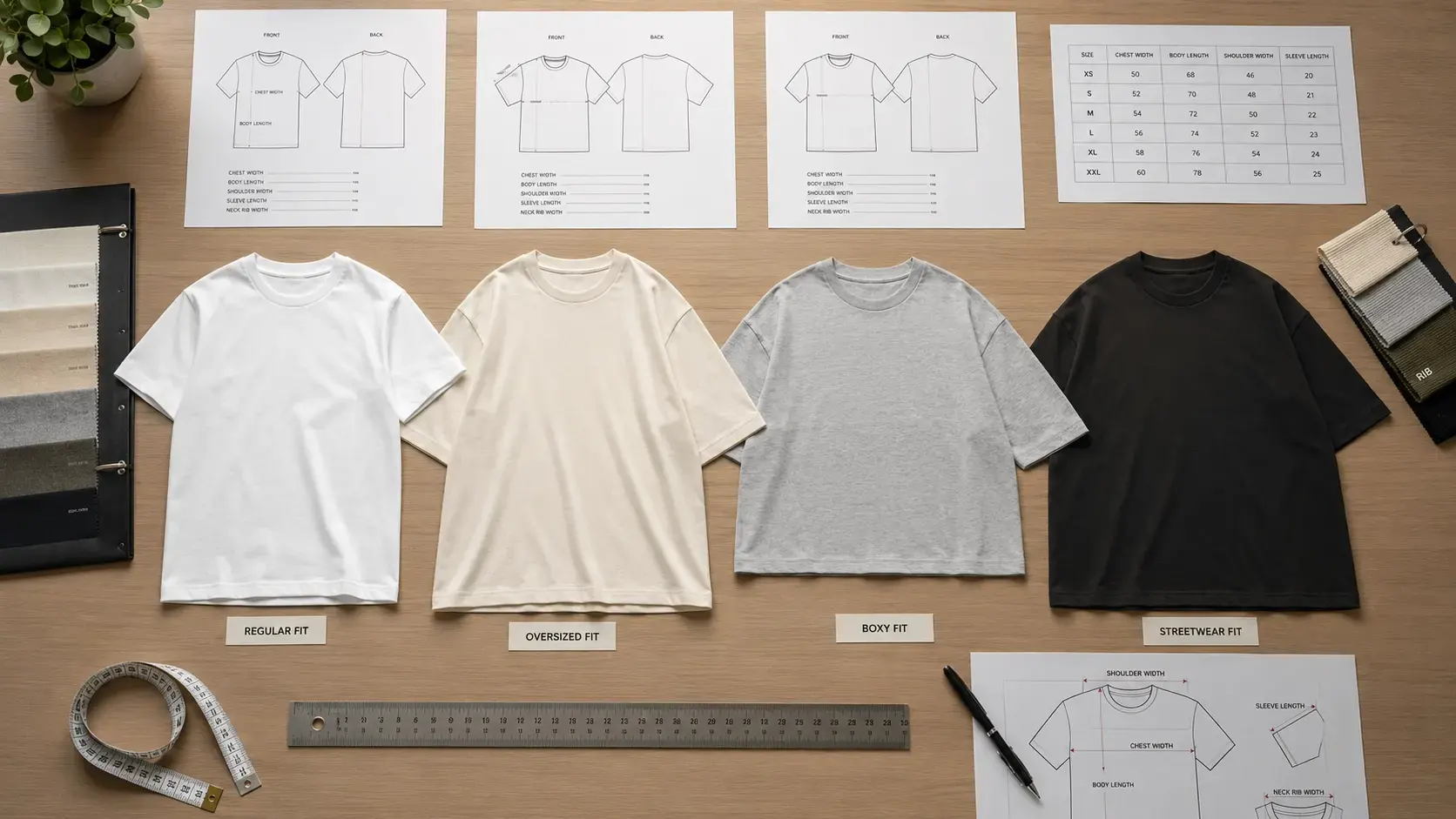
Common fits include:
- Regular fit: suitable for basics, uniforms, and broad-size markets
- Oversized fit: popular for streetwear, often with dropped shoulders and wider chest
- Boxy fit: wider body and shorter length, often used for modern streetwear
- Streetwear fit: may combine heavyweight fabric, wider sleeves, and structured shape
For oversized T-shirts, do not simply size up a regular fit. A proper oversized pattern should be developed separately.
Before sampling, confirm key measurements such as chest width, body length, shoulder width, sleeve length, sleeve opening, neck rib width, and hem width.
Construction details may include side seams, tubular body, double-needle stitching, shoulder tape, rib collar type, and washing or shrinkage requirements.
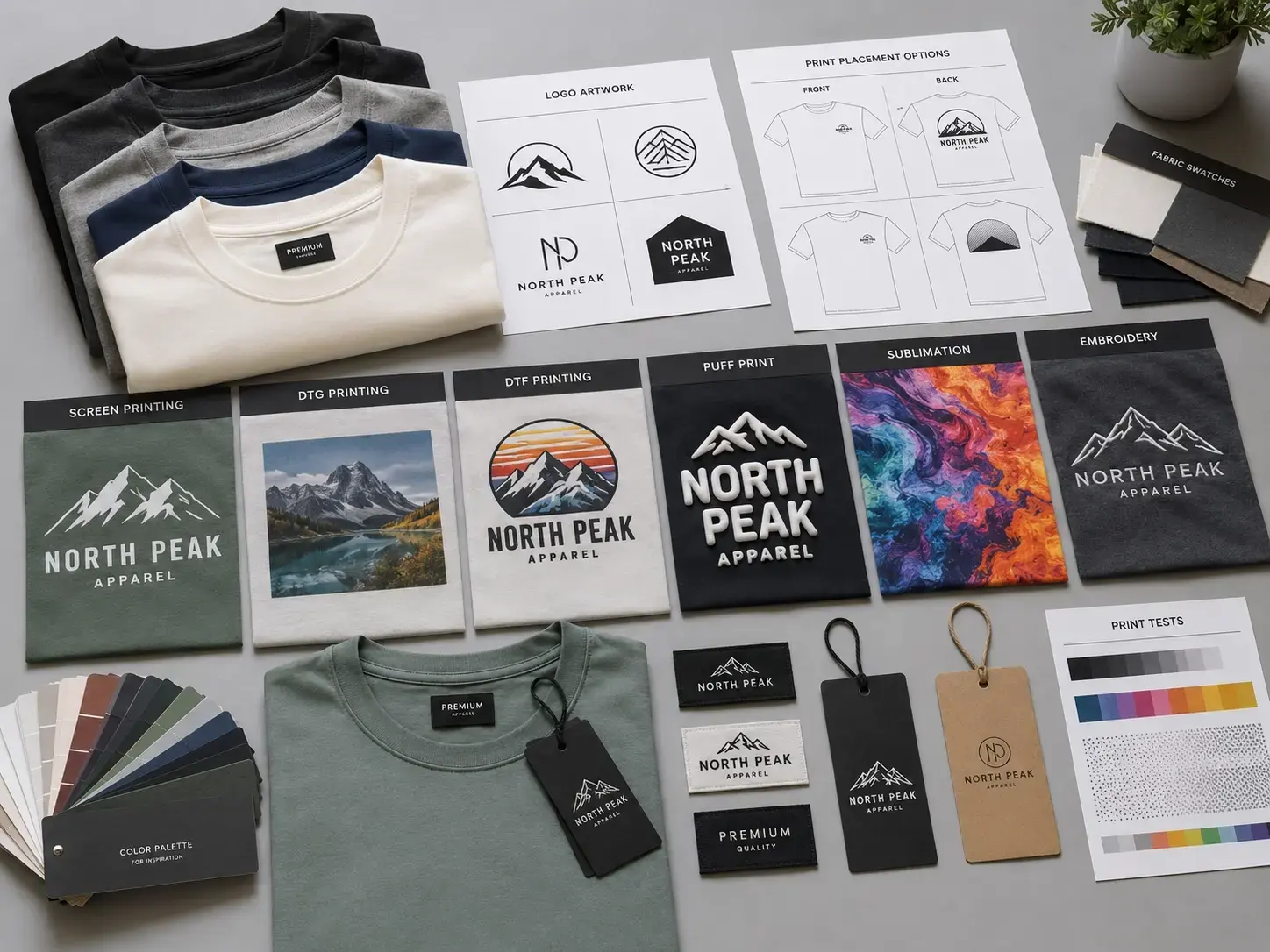
Printing and Embroidery Options
The best decoration method depends on your artwork, fabric, quantity, hand feel, and target price.
Screen printing is suitable for bulk orders and solid-color designs. It is durable and cost-effective at higher quantities.
DTG printing works well for detailed artwork, gradients, and smaller runs, especially on cotton fabrics.
DTF printing is flexible and can be used on many fabric types. It is useful for colorful designs and smaller production runs.
Puff print creates a raised texture and is popular for streetwear logos and graphics.
Sublimation is mainly used for polyester T-shirts and all-over prints. It is not suitable for regular cotton T-shirts.
Embroidery gives a premium look and works well for small logos, chest details, sleeve marks, and brand accents.
Before sampling, buyers should provide artwork files, print size, placement, color references, and preferred decoration method.
Private Label and Packaging Options
Private label details make your T-shirts feel like a real brand product instead of blank apparel.
Common options include:
- Printed neck labels
- Woven labels
- Size labels
- Hang tags
- Size stickers
- Custom poly bags
- Barcode labels
- Branded packaging
For startup brands, printed neck labels and hang tags are practical first options. For premium collections, woven labels and custom packaging can improve brand presentation.
Before production, confirm label artwork, label size, placement, material, and packaging requirements.
MOQ, Sampling, and Bulk Production
Before requesting a quote from a custom T-shirt manufacturer, buyers should understand how MOQ, sample cost, and lead time are calculated.
MOQ usually depends on fabric availability, color, printing method, embroidery, label requirements, and whether the fabric needs custom dyeing. A common structure is MOQ per design and per color, with size mix allowed.
Sample cost is usually higher than bulk unit price because one sample may require pattern adjustment, fabric sourcing, print setup, embroidery testing, label preparation, and manual sewing.
A simple custom T-shirt sample may take around 7–15 days if fabric and trims are available. Bulk production may take around 2–5 weeks after sample approval, depending on order quantity, fabric preparation, printing, embroidery, labeling, packaging, and quality inspection.
To get a more accurate quote, prepare:
- Reference photos
- Preferred fit
- Fabric type or GSM
- Size chart
- Artwork files
- Print or embroidery placement
- Label and packaging requirements
- Quantity by color and size
- Delivery country
- Target timeline
Common Mistakes to Avoid
New buyers often make avoidable mistakes in custom T-shirt production.
Common mistakes include:
- Choosing fabric only by price
- Not confirming GSM
- Using low-resolution artwork
- Treating oversized fit as simply a larger regular fit
- Ordering too many colors in the first run
- Skipping sample review
- Not confirming labels and packaging before bulk production
A better approach is to start with fewer colors, review the sample carefully, and confirm all production details before mass production.
How MX Clothing Can Help
MX Clothing helps fashion startups, private label brands, online stores, streetwear labels, and bulk buyers develop custom T-shirts from sample to bulk production.
If you already have a tech pack, MX Clothing can follow your specifications for fabric, fit, measurements, artwork placement, labels, and packaging. If you only have reference photos or early ideas, the team can help organize your requirements and suggest practical options for fabric, GSM, fit, printing, embroidery, and MOQ.
For custom T-shirt projects, MX Clothing can support regular fit, oversized fit, boxy fit, heavyweight cotton T-shirts, performance T-shirts, printed T-shirts, embroidered T-shirts, private label T-shirts, sample development, and bulk production planning.
To start a quote, buyers can prepare reference photos, artwork files, preferred fabric or GSM, order quantity, size range, label requirements, and delivery country.
Final Thoughts
Choosing the right custom T-shirt manufacturer is not only about finding the lowest unit price. A successful T-shirt project depends on fabric selection, GSM, fit, print method, artwork quality, private label details, sample approval, MOQ planning, and bulk production control.
For new brands, it is better to start with a focused T-shirt project, limited colors, and a clear sample review process. Once the first design is tested and approved, you can expand into more fabrics, fits, graphics, and seasonal collections.
FAQ
What is the MOQ for custom T-shirts?
MOQ depends on fabric, color, printing method, embroidery, labels, and packaging. In many projects, MOQ is calculated by design and color, while size mix is usually allowed.
What fabric is best for streetwear T-shirts?
Heavyweight cotton is commonly used for streetwear T-shirts because it gives a structured hand feel and works well with oversized or boxy fits. Many streetwear T-shirts use around 220–300 GSM.
Which printing method is best for custom T-shirts?
Screen printing is suitable for bulk orders, DTG works well for detailed artwork on cotton, DTF is flexible for colorful designs, puff print adds texture, and sublimation is best for polyester T-shirts.
Can I customize neck labels and packaging?
Yes. Custom T-shirts can include printed neck labels, woven labels, hang tags, size stickers, custom poly bags, barcode labels, and branded packaging.
How long does custom T-shirt production take?
Simple samples may take around 7–15 days. Bulk production may take around 2–5 weeks after sample approval, depending on fabric, order quantity, printing, embroidery, labels, and packaging.
READ NEXT
Related Articles


POPULAR PRODUCTS
Hot Selling Products